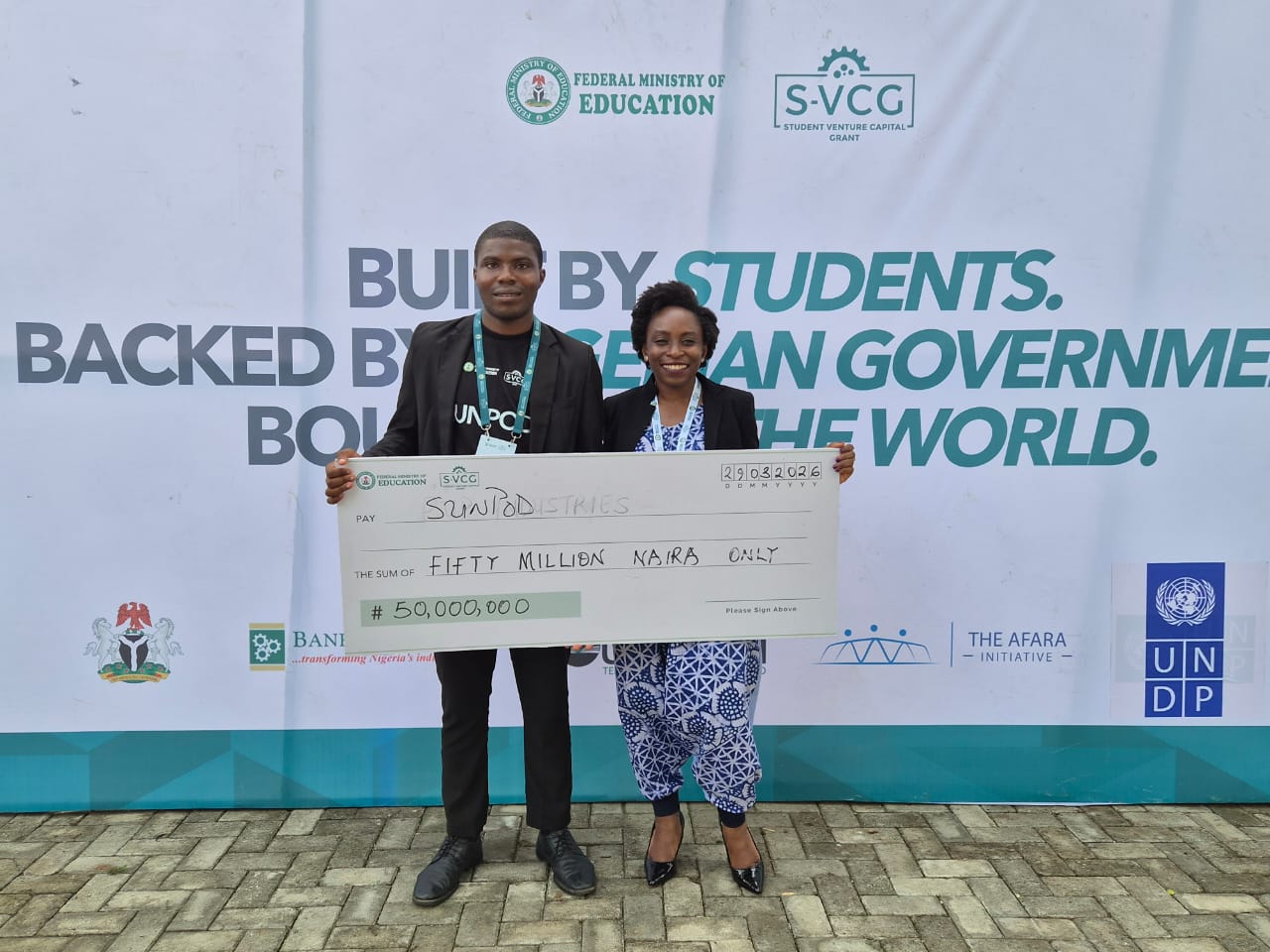
In a remarkable achievement that underscores the growing impact of student-led innovation in Nigeria, Emmanuel Aanu Ajayi has emerged as a recipient of the Federal Government’s prestigious ₦50 million Student Venture Capital Grant.
Ajayi, a final-year Electrical and Computer Engineering student at Kwara State University, distinguished himself through a competitive selection process that attracted participants from tertiary institutions across the country. His success highlights the increasing role of Nigerian universities as hubs for innovation, entrepreneurship, and technological advancement.
About the Student Venture Capital Grant Initiative
The Student Venture Capital Grant (S-VCG), introduced by the Federal Ministry of Education Nigeria, is designed to support student entrepreneurs with high-impact ideas.
Key objectives of the initiative include:
Providing equity-free funding of up to ₦50 million
Supporting the transition from innovation to commercialization
Encouraging entrepreneurship among students
Promoting job creation and economic development

The program reflects a broader national strategy to empower young Nigerians to become solution providers and business leaders.
The Innovation: SUNPOD Solar Power Solution
At the heart of Ajayi’s success is his innovative project, SUNPOD—a solar-powered energy system developed using recycled electronic waste.
This solution addresses two pressing challenges in Nigeria:
1. Unstable Power Supply
Access to reliable electricity remains a major issue affecting households, educational institutions, and businesses.
2. Environmental Pollution from E-Waste
Improper disposal of electronic waste contributes significantly to environmental degradation.
A Dual-Impact Solution
SUNPOD integrates sustainability with functionality by:
Converting electronic waste into renewable energy systems
Delivering affordable and accessible solar power
Reducing environmental hazards
Promoting a circular economy
This innovative approach positions SUNPOD as a scalable solution with both economic and environmental benefits.
Strategic Utilization of the ₦50 Million Grant
The grant provides a significant boost to the development and expansion of the SUNPOD project. Ajayi has outlined a strategic plan for deploying the funds effectively, including:
Acquisition of advanced production equipment
Expansion of manufacturing capacity (targeting increased daily output)
Procurement of essential raw materials
Building a skilled team for operations and distribution
The funding is expected to accelerate the transition of SUNPOD from a promising concept to a commercially viable product.
Why This Achievement Matters
1. Advancing Innovation in Higher Education
Ajayi’s success reflects a shift toward practical, solution-driven learning within Nigerian universities.
2. Encouraging Youth Entrepreneurship
The initiative reinforces the importance of empowering students to become job creators rather than job seekers.
3. Driving Sustainable Development
Innovations like SUNPOD contribute to:
Improved energy access
Environmental sustainability
Economic growth
4. Inspiring the Next Generation
This milestone serves as a powerful example for other students, demonstrating that innovative ideas can attract national recognition and substantial funding.

A Glimpse into Nigeria’s Innovation-Driven Future
The Federal Government’s continued investment in student entrepreneurs signals a transformative shift in the country’s educational and economic landscape. By fostering innovation at the university level, Nigeria is laying the foundation for a future driven by technology, sustainability, and youth empowerment.
Conclusion
Emmanuel Aanu Ajayi’s ₦50 million grant win marks a significant milestone not only for Kwara State University but also for Nigeria’s innovation ecosystem. His SUNPOD project exemplifies how creativity, technical expertise, and strategic support can combine to address real-world challenges.
As more students embrace innovation and entrepreneurship, initiatives like the Student Venture Capital Grant will continue to play a critical role in shaping Nigeria’s next generation of leaders and problem-solvers.