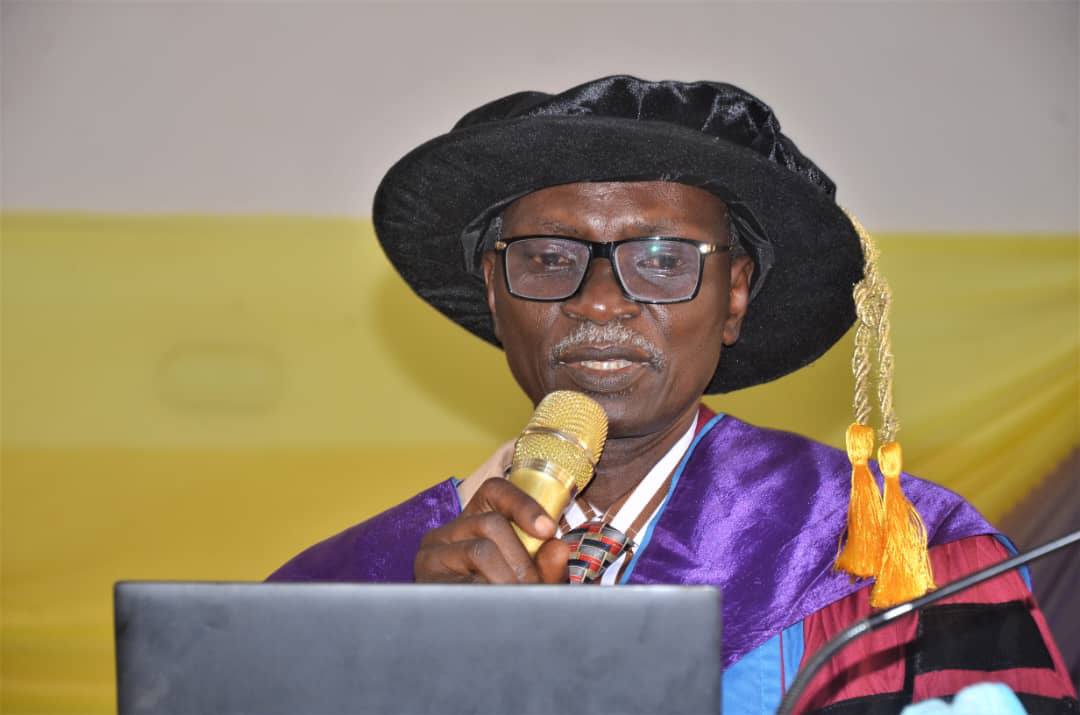
Transportation remains a critical pillar of economic growth, and this reality took center stage during the 122nd inaugural lecture delivered by Joel Ademola Ojekunle at the Federal University of Technology Minna. In his thought-provoking lecture titled “Reviving the Comatose Arteries and Blood of the Nigerian Economy: An Inescapable Route to Sustainable National Development,” Prof. Ojekunle presented a compelling case for a comprehensive overhaul of Nigeria’s transport infrastructure.

Transport System as the Lifeblood of the Economy
Using a vivid analogy, Prof. Ojekunle described transport infrastructure—roads, railways, seaports, and airports—as the “arteries” of the economy, while vehicles and mobility systems represent the “blood” that sustains it. According to him, just as the human body cannot function without proper blood circulation, no economy can thrive without an efficient and integrated transport system.
Challenges Facing Nigeria’s Transport Sector
The professor expressed deep concern over the deteriorating state of Nigeria’s transport system, attributing its challenges to decades of systemic neglect. Key issues identified include:
- Poor maintenance culture of transport infrastructure
- Inadequate funding and delayed project execution
- Corruption and mismanagement of resources
- Substandard construction practices
- Rapid urbanization without proper planning
- Overloading of vehicles and weak regulatory frameworks
These factors, he noted, have collectively resulted in what he termed a “comatose transport system,” significantly hindering national development.
Economic Impact of Inefficient Transport Systems
Highlighting the economic implications, Prof. Ojekunle revealed that inefficiencies in Nigeria’s transport sector account for an estimated 2% loss in the country’s Gross Domestic Product (GDP) annually. Additional consequences include:
- Increased cost of goods and services
- Delays in supply chains and distribution networks
- Reduced productivity and business efficiency
- Higher rates of road accidents and environmental risks
- Limited access to markets and essential social services
He further stressed that about 90% of passenger and freight movement in Nigeria depends on road transport, making the system particularly vulnerable to disruptions.
Strategic Solutions for Transport Sector Revitalization
To reposition Nigeria’s transport system for sustainable growth, Prof. Ojekunle proposed a series of actionable strategies:
- Infrastructure Development: Rehabilitation and expansion of roads, highways, and rail networks with consistent maintenance
- Public-Private Partnerships (PPP): Encouraging private sector investment and reintroducing toll systems
- Smart Transport Technologies: Adoption of intelligent transport systems and AI-driven monitoring
- Mass Transit Expansion: Development of Bus Rapid Transit (BRT) systems and modern rail services
- Intermodal Integration: Seamless coordination between road, rail, air, and waterways
- Policy and Regulatory Reforms: Strengthening governance frameworks and ensuring transparency
- Research and Innovation Funding: Investing in data-driven transport solutions and innovation
He noted that globally, transportation contributes approximately 7% to GDP, underscoring its strategic importance in economic development.

Call to Action for National Development
In conclusion, Prof. Ojekunle called on government authorities, policymakers, and industry stakeholders to prioritize transport infrastructure as a cornerstone of national planning. He emphasized that revitalizing Nigeria’s transport system is not optional but a critical pathway to achieving economic prosperity, improved quality of life, and national integration.