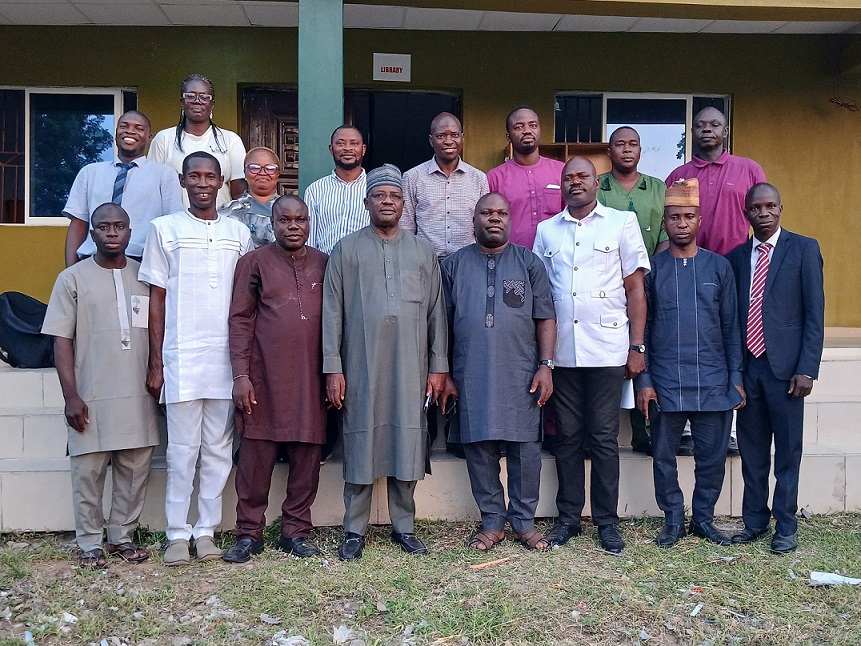
The event was graced by highly respected academics, including Prof. A.O. Olalubi, the first professor of public health in Kwara State University, and Prof. Khadijat Toyin Musah, professor of Community-public health nursing and dean, faculty of nursing sciences, Federal University Otuoke. Both scholars who are long-standing mentors of the author, lent intellectual depth and credibility to the occasion.
Invited guests are Hon. (Dr.) Anthony Adebayo Adepoju, representing Ibarapa Central/North Federal Constituency at the National Assembly of Nigeria, Mr Dominic Akinjide Fagbemi (DAF), alongside an array of international and local personalities which included Dr. Wubishet N.A., Dr. Bernard Andorbe, Dr. Onabanjo Michael and Mrs. M. Taiwo Ganiyat. Members of the KWASU Alumni community, public health leaders, and students from across Nigeria and Africa are also well represented.
In his keynote review, Prof. Olalubi delivered a critical appraisal of the structural challenges confronting students’ research experiences within higher institutions. He identified persistent issues such as communication gaps between students and supervisors, restrictive academic timelines, and the burden of supervisors’ tight schedules. He emphasized the timeliness of the book, noting that it addresses long-standing concerns he has consistently raised. Drawing from practical realities, he highlighted how inefficiencies in research processes often prolong academic programs, with some students spending six to seven years completing courses originally designed for four years.
Serving as Mentor Discussant, Prof. Musah underscored the foundational role of research in advancing education and professional practice. She stressed the importance of students mastering the intricacies of research methodology and scholarly writing as a pathway to academic excellence and innovation instead of contracting project works which eventually deny them ownership. Reflecting on her mentorship journey with the author, she commended his evolution from a student leader—having served as President of the Association of Public Health Students at Kwara State University—to his current role as a lecturer. She expressed pride in his achievements and acknowledged the impact of mentorship in shaping his academic trajectory.
In his presentation, the author, Arise Victor Oluwaseyifunmi, who’s a young academic and public health researcher provided a compelling rationale for the book, drawing from observed challenges among students engagement in research writing. He outlined recurring issues including difficulties with sourcing credible data, poor organization and structural coherence, ineffective data presentation, weak articulation of findings, citation and referencing errors, terminological inconsistencies, and improper formatting of recommendations.
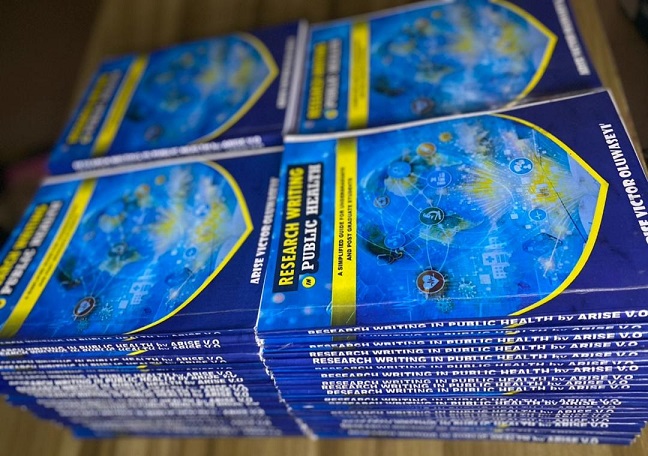
He explained that “Research Writing in Public Health” is designed as a practical and simplified guide, enriched with relatable examples, actionable tips and figurative explanations to demystify complex research concepts. The book, he noted, is particularly tailored to support students and early-career researchers in producing high-quality, impactful and publishable research.
The launch concluded with strong endorsements from participants, positioning the book as a timely intervention in addressing gaps in research capacity development within Nigeria and the broader academic landscape. The author appreciates everyone’s presence and promised the book will be made available to students and early career researchers at a subsidized cost to support them in their research journey.